
The Only Subway Menu Guide
You’ll Ever Need
Every sandwich, bread, protein, sauce, topping, and combo explained — plus the ordering strategies, nutrition hacks, and value plays that make every Subway visit count.
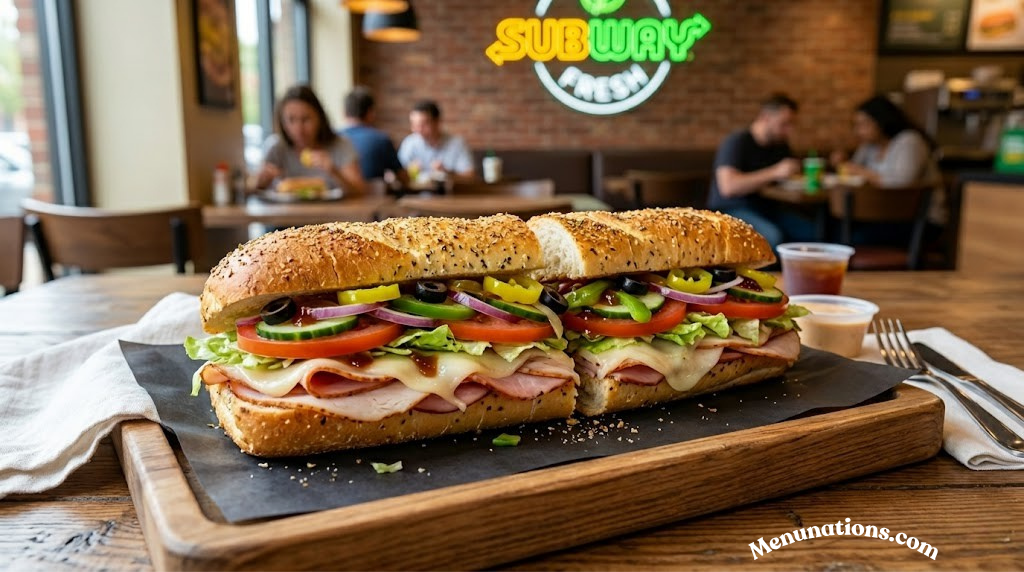
Subway at a Glance — Why This Menu Is Deeper Than It Looks
Walk into any Subway location and you’re immediately presented with what looks like a simple choice: pick a sub. But spend even five minutes with someone who eats here regularly, and you quickly discover that the gap between a casual Subway order and a genuinely great one is enormous. The menu is more modular, more customizable, and frankly more interesting than most people give it credit for.
Subway operates more locations globally than almost any other restaurant chain on the planet. The sheer scale of that footprint means the menu has been refined across decades of consumer feedback, regional preferences, and competitive pressure. What you see on the menu board is the surface — underneath it is a layered system of bread choices, protein options, sauce combinations, toasting preferences, and modification possibilities that can produce thousands of distinct sandwiches from the same basic setup.
This guide is built for everyone — whether you’re ordering for the first time and don’t want to look clueless at the counter, or you’ve been eating the same Meatball Marinara for a decade and want to discover what else the menu has to offer. We’ll cover every bread, every protein, every signature sub worth knowing, the full topping and sauce library, nutrition strategies, ordering hacks, diet-specific builds, and how the value system actually works.
Jump to any section via the Table of Contents on the left, or read straight through for the complete picture. Each section is self-contained, so you can come back to specific parts whenever you need them.
If you’re the type who enjoys deep-diving into restaurant menus — comparing chains, understanding ingredient systems, and finding the best possible order for every situation — you might also enjoy guides to other major chains like the Chipotle menu guide, the Panera Bread menu guide, or the classic McDonald’s menu guide. But few menus offer the degree of user control that Subway does — and that’s what makes it worth understanding thoroughly.
The Complete Subway Bread Guide
Bread is everything at Subway. It is the structural backbone, the textural frame, and — more than any other single ingredient — the choice that defines whether your sandwich works or falls apart. Subway bakes its bread fresh in-store at most locations, and the choice between varieties goes beyond personal preference into genuine impact on flavor, calorie count, and texture compatibility with different fillings.
Here’s a complete breakdown of every bread currently available, with honest guidance on which fillings each one serves best:
Italian (White)
The default. Soft, mild, and neutral — it lets protein and sauce do the talking. Best for heavy sauced subs like Meatball Marinara.
Classic9-Grain Wheat
Slightly nutty, hearty texture. Holds fillings without getting soggy. An excellent all-rounder that genuinely complements nearly every sub.
Hearty9-Grain Honey Oat
A touch of sweetness from the oat topping. Works particularly well with turkey, chicken, or sweet sauces like honey mustard. The crowd favorite.
HeartyItalian Herbs & Cheese
Oregano, basil, and parmesan baked into the crust. Adds a savory herbed dimension — great with Italian meats and the Spicy Italian build.
ClassicSourdough
Where available, Subway’s sourdough offers a mild tang and chewier crumb. Particularly good with BLTs and steak-based subs.
HeartyFlatbread
Thin, flexible, lower-carb alternative. Works best for lighter fillings — great for vegetarian builds, turkey, or tuna. Doesn’t hold heavy sauces well.
FlatbreadWrap (Spinach/Tomato)
Available as spinach or tomato basil wraps at select locations. The most portable format and the lowest-calorie vehicle for most fillings.
WrapGluten-Free Bread
Available in a 6-inch size only. Important note: made in a shared environment, so not suitable for celiac disease. Available at participating locations.
GF OptionAlways ask if bread is fresh-baked when you arrive. Morning visits typically get the freshest bread. If the Italian looks pale or dense, 9-Grain Wheat or Honey Oat usually holds up better later in the day.
Bread Flavor & Texture Spectrum
Where does each bread fall on the flavor and texture axes? This diagram makes the choice instant:

Recreate Subway-Style Subs at Home 🥖
A quality serrated bread knife is the key to perfect deli-style subs at home. Get bakery-clean cuts on any loaf without crushing the crumb.
Shop Bread Knives on Amazon →Every Subway Protein & Meat Option Explained
Protein is where Subway’s menu has expanded most aggressively over the years. The classic deli-counter staples — turkey, ham, roast beef — are still there, but they now share space with rotisserie chicken, steak, smashed patties, and seafood options that have significantly broadened the chain’s appeal. Here’s an honest look at every protein currently available:
Oven-Roasted Turkey
The perennial bestseller. Lean, mild, and endlessly adaptable — turkey is the neutral canvas that lets your bread and topping choices shine. Low in fat, high in protein, and the default recommendation for first-timers.
Most PopularRotisserie-Style Chicken
Tender pulled chicken with a rotisserie-seasoned flavor profile. More substantial than sliced turkey and genuinely one of the best quality proteins Subway carries. Excellent in wraps and on hearty breads.
Top PickSteak (Philly-Style)
Shaved beef, typically used in the Philly Cheesesteak sub. Rich, savory, and pairs beautifully with provolone and sautéed peppers. The premium protein tier at most locations.
PremiumMeatballs
Italian-seasoned beef and pork meatballs in marinara sauce. The Meatball Marinara is Subway’s most iconic sub precisely because the meatballs are inherently saucy and generous. Highest calorie protein by volume.
ClassicTuna
Chunk white tuna mixed with mayonnaise. Creamy, rich, and surprisingly filling. A cult favorite. Best on 9-Grain Wheat with cucumber, lettuce, and extra black pepper. Not for the mayo-averse.
Cult FavoriteEgg (Breakfast)
Folded egg available during breakfast hours. Can be combined with bacon, ham, or steak for a full breakfast sub. Underrated and significantly more filling than it sounds, especially on flatbread.
BreakfastVeggie Patty / Beyond
Plant-based protein options vary significantly by location. The Beyond Meatball and Veggie Patty are the primary plant-based proteins, both of which deliver reasonable flavor without animal products.
Plant-BasedHam (Black Forest)
Slightly smoky, mildly sweet Black Forest ham. One of the most economical protein choices and excellent paired with swiss cheese and honey mustard. Classic deli flavor in every bite.
Value PickProtein Comparison — Flavor Intensity vs. Calorie Load
| Protein | Flavor Intensity | Cal (6-inch avg) | Protein (g) | Best Bread Pairing |
|---|---|---|---|---|
| Turkey | Mild | ~220 | 18g | 9-Grain Wheat, Flatbread |
| Rotisserie Chicken | Medium | ~270 | 24g | Honey Oat, Sourdough |
| Steak | Medium-Bold | ~300 | 22g | Italian, Herbs & Cheese |
| Meatballs | Bold | ~430 | 20g | Italian (White) |
| Tuna | Rich / Creamy | ~480 | 21g | 9-Grain Wheat |
| Ham | Mild-Smoky | ~210 | 17g | Honey Oat, Italian |
| Veggie Patty | Earthy / Mild | ~260 | 14g | 9-Grain Wheat, Flatbread |
| Roast Beef | Medium-Bold | ~290 | 22g | Italian Herbs & Cheese |
Signature Subs Ranked & Reviewed
Subway’s Signature Series represents the curated “best of” — preset builds that the chain believes are optimized combinations. Some are untouchable classics, others are worth ordering differently. Here’s an honest ranking with context:
| Sub | Core Ingredients | Rating | Best Modification |
|---|---|---|---|
| The Philly | Steak, provolone, green peppers, onion, mushroom | ★★★★★ | Add chipotle southwest sauce |
| Italian B.M.T.® | Pepperoni, salami, ham, veggies | ★★★★★ | Herbs & Cheese bread, toasted |
| Meatball Marinara | Meatballs, marinara, provolone | ★★★★☆ | Add banana peppers + extra oregano |
| Turkey Cali Fresh | Turkey, BLT, guacamole, herb aioli | ★★★★☆ | Double turkey, add spinach |
| Subway Club® | Turkey, ham, roast beef triple combo | ★★★★☆ | Add bacon, toasted |
| Tuna | Tuna mayo, any bread, any toppings | ★★★★☆ | Cucumber, red onion, extra black pepper |
| Spicy Italian | Pepperoni, salami, banana peppers | ★★★☆☆ | Add jalapeños, chipotle sauce |
| Veggie Delite | All vegetables, no protein | ★★★☆☆ | Add avocado, double cheese |
| Steak & Cheese | Steak, American cheese, veggies | ★★★★☆ | Switch to provolone, add jalapeños |
| Chicken & Bacon Ranch | Rotisserie chicken, bacon, ranch, cheese | ★★★★★ | Toasted, add avocado |
The Italian B.M.T. has been on the Subway menu since the beginning for a reason — the layering of three distinct cured meats creates a depth of flavor that no single-protein sub can match at this price point.
The key insight about Subway’s Signature Series is that they are starting points, not endpoints. Every preset can be improved with targeted modifications — adding a sauce that isn’t in the default build, swapping bread, requesting a toasted option, or doubling a topping that’s undersupplied in the standard configuration. The best Subway sandwich you’ve ever had was almost certainly a customized one.
For anyone who loves comparing menus across competitive restaurant chains, the contrast between Subway’s modular approach and the more rigid format at a chain like Burger King or the artisanal fresh approach at Panera Bread is genuinely interesting. Subway sits in a unique middle ground: fast food speed and price, deli-level customization depth.

Build Deli-Quality Subs at Home 🥩
Freshly sliced deli meat makes every sandwich significantly better. A compact electric slicer gives you paper-thin cuts just like a proper deli counter.
Shop Meat Slicers on Amazon →The Full Toppings & Sauces Library
Toppings and sauces are where most people’s Subway customization knowledge starts and ends — but the full library is much richer than “lettuce, tomato, and mayo.” Understanding which combinations work together, and which sauces are dramatically underused, unlocks a completely different tier of sandwich quality.
Vegetables & Toppings
Sauces — The Underexplored Layer
Cheese Options
Sauce Strategy — What Actually Works
Most people default to mayonnaise or ranch without realizing that Subway’s other sauces are significantly more interesting and often better suited to the protein they’ve chosen. Here’s a targeted pairing guide:
| Sauce | Flavor Profile | Best With | Avoid With |
|---|---|---|---|
| Chipotle Southwest | Smoky, mildly spicy, creamy | Chicken, Steak, Spicy Italian | Tuna, Meatball |
| Honey Mustard | Sweet, tangy, light | Ham, Turkey, Chicken | Steak, Meatball |
| Sweet Onion Teriyaki | Sweet, savory, sticky | Teriyaki Chicken, Turkey | Italian meats, Tuna |
| Garlic Aioli | Rich, savory, garlicky | Turkey, Chicken, Veggie builds | Meatball (double richness) |
| Sriracha | Hot, tangy, slightly sweet | Steak, Chicken, Spicy Italian | Tuna, Veggie Delite |
| Pesto | Herby, nutty, rich | Chicken, Turkey, Veggie | Ham, Meatball |
| Olive Oil & Vinegar | Bright, acidic, light | Italian B.M.T., any Italian build | Sweet proteins (Ham with honey) |
Asking for two sauces on one sub is completely normal at Subway. The most powerful combo: chipotle southwest + honey mustard on turkey or chicken. The smoky-sweet balance this creates is far better than either sauce alone.
Subway Nutrition Deep Dive
Subway built its brand around the concept of fresh, healthier fast food — and while that positioning has been debated over the years, the truth is nuanced. There are genuinely excellent nutritional choices at Subway, and some that are far less lean than their “fresh” branding implies. Here’s how to navigate the menu with full nutritional awareness.
✅ Nutritional Strengths
- High-protein options across most subs
- Full calorie transparency on all menu items
- Fresh vegetables with no preparation cost
- 6-inch portions keep calories manageable
- Fresco-style (no sauce) options reduce fat significantly
- Genuine low-calorie builds possible under 300 calories
❌ Nutritional Watchpoints
- Sodium levels are very high across most subs
- Tuna sub has more calories than many expect
- Cookies and sides add significant sugar and fat
- Sauces are the biggest hidden calorie source
- Footlong doubles everything — not always the value win it seems
- Cheese adds 40–60 cal per slice (easy to stack)
The Lowest-Calorie Subs (6-Inch)
| Sub | Calories | Protein | Sodium | Fat |
|---|---|---|---|---|
| Veggie Delite (no cheese/sauce) | ~160 | 5g | 280mg | 1.5g |
| Turkey (no cheese) | ~220 | 18g | 710mg | 3.5g |
| Ham (no cheese) | ~210 | 17g | 820mg | 3g |
| Roast Beef (no cheese) | ~235 | 21g | 560mg | 3.5g |
| Rotisserie Chicken | ~270 | 24g | 590mg | 5g |
The single biggest nutrition trap at Subway is the sauces. Mayonnaise adds ~110 calories and 11g fat per serving. Chipotle southwest adds ~100 calories. If calorie management matters, stick to yellow mustard, red wine vinegar, or oil-free options — all under 20 calories per serving.

Track Your Macros With Precision 📊
Whether you’re meal-prepping Subway-style subs at home or tracking your fast food calories precisely, a compact kitchen scale gives you accurate portion control.
Shop Kitchen Scales on Amazon →Pro Subway Ordering Hacks That Change the Game
These strategies are known by regulars and frequent visitors, but rarely communicated openly. Each one delivers a meaningfully better sandwich without costing more — or at worst, adds very little to the total bill.
The Anatomy of a Perfect Subway Order
Always Toast — Even If You Think You Don’t Want To
Toasting does more than heat the sub. It firms the bread structure so it can hold sauces without becoming soggy, melts cheese into the protein layer for better flavor cohesion, and adds a textural contrast that cold subs simply lack. If you’re uncertain, toast. You can always ask for a brief toast rather than a full press.
Order “Extra” on Toppings — It’s Usually Free
Subway employees are trained to add vegetables generously, but the default pour is conservative. Asking for “extra lettuce” or “double spinach” or “lots of cucumber” almost never costs anything and substantially improves the ratio of fresh vegetables to bread. This is one of the clearest value hacks on any fast food menu.
Use the App to Skip the Customization Conversation
The Subway app allows you to build your entire order with full control over every ingredient, specify toasting preference, add special instructions, and earn rewards simultaneously. For complex orders or anyone who finds the counter interaction stressful, the app is a genuinely superior experience — and your custom order saves for repeat ordering.
Specify “Less Bread” on Footlongs
The footlong loaf naturally has more bread-to-filling ratio challenges than the 6-inch. Asking for the bread to be “scooped” (hollowing out some of the soft interior crumb) creates more room for fillings and reduces calories by 60–80 per footlong. This is a standard modification that almost every Subway employee knows.
Time Your Visit for the Best Bread
Subway bakes fresh bread in cycles. Arriving shortly after a bake cycle — which you can often identify by the fresh bread smell as you walk in — means you get bread at its absolute best: crust still slightly crisp, interior soft and warm. Morning visits before 10 AM are almost always the freshest.
The “Double Cheese” Move
Adding an extra slice of cheese (there’s a modest upcharge, usually under a dollar) dramatically changes the flavor profile of any sub. The key is to request it be added before toasting so it melts fully into the protein layer. Provolone, swiss, or pepper jack work particularly well this way.
Combine the “Subway Club” Hack
The Subway Club (turkey, ham, roast beef together) represents one of the best value builds on the menu because you’re getting three proteins at a price lower than you’d expect. Apply this logic to custom builds: asking for a combination of two meats at a fair cost creates depth of flavor that single-protein subs can’t match.
Subway Builds for Every Diet
One of Subway’s genuine competitive advantages is its compatibility with a wide range of dietary approaches. From high-protein athletic diets to plant-based, low-carb, and calorie-restricted eating patterns, the menu can accommodate nearly any nutritional goal if you know how to navigate it. Here are the optimal builds for the most common dietary approaches:
| Diet Type | Best Bread | Best Protein | Key Toppings | Sauce | Avoid |
|---|---|---|---|---|---|
| High-Protein | 9-Grain Wheat | Double Rotisserie Chicken | Spinach, peppers, extra veggies | Mustard or light chipotle | Tuna mayo (fat-heavy) |
| Low-Calorie | Flatbread or 6″ White | Turkey or Ham | Load up on all free veggies | Yellow mustard or vinegar | Mayo, chipotle, ranch |
| Low-Carb / Keto | Salad bowl (no bread) | Steak, Chicken, or Tuna | Spinach, olives, peppers, avocado | Oil & vinegar, ranch | All breads, sweet onion sauce |
| Vegetarian | 9-Grain Honey Oat | Veggie Patty or Beyond | Avocado, all vegetables | Pesto, garlic aioli | Meat-based proteins |
| Vegan | Italian or Flatbread (verify dairy-free) | Veggie Patty (no cheese) | All vegetables, pickles, jalapeños | Yellow mustard, oil & vinegar | Cheese, mayo, ranch, aioli |
| Diabetic-Friendly | Flatbread (lower carb) | Turkey or Rotisserie Chicken | Non-starchy veggies maximized | Mustard, oil & vinegar | Sweet onion sauce, honey mustard |
| Bulking / High Calorie | 12″ Italian Herbs & Cheese | Double Steak + extra cheese | Avocado, olives, banana peppers | Chipotle + mayo | Flatbread (too low volume) |
If you’re thinking about sandwich nutrition in the context of broader dietary management, it’s worth exploring other chains’ approaches to health-forward menus. The Chipotle vs. Qdoba comparison covers how burrito chains handle macros, while the Panera Bread guide details another fresh-food fast-casual approach that some nutritionists prefer to Subway for certain dietary goals.

Meal Prep Your Own Subway-Style Subs 🥗
Pack homemade subs for the week with the right airtight containers — keep bread, protein, and veggies separate until you’re ready to eat for maximum freshness.
Shop Meal Prep Containers →Subway Value & Deals Guide
Subway’s pricing structure can be confusing if you don’t understand how it works. The gap between a mediocre value Subway visit and an excellent one can be $3–5 on the same budget, purely based on knowing which deals apply and how the rewards program is best used.
Subway MVP Rewards — The Breakdown
Subway’s loyalty program is points-based, with rewards tokens earned per dollar spent and redeemable for free items, discounts, and exclusive offers. The MVP tier structure rewards consistent visitors with accelerated earning rates and member-only deals. The key insight: using the app consistently, even for orders you’d place anyway, compounds significantly over time.
- MVP Member: 4 tokens per $1 spent. Base tier — where everyone starts.
- MVP Pro: 5 tokens per $1. Reached after $75 in purchases.
- MVP Elite: 6 tokens per $1. Reached after $150 in purchases.
- Birthday reward: Free 6-inch sub on your birthday, automatically loaded.
- Flash deals: App-exclusive offers rotate weekly and frequently offer a free item with a minimum purchase — worth checking before every visit.
The Value Playbook
Footlong vs. Two 6-Inch — Run the Math
A footlong is not always the better value per inch. Frequently, the footlong deal is priced at less than 2× the 6-inch. But when Subway is running BOGO offers (common via email, app, or promotional events), two 6-inch subs at half price can equal a footlong for less. Always check active offers before defaulting to a footlong.
Skip the Combo — Build Your Own Sides
Subway’s meal combos (sub + chips + drink) typically save you less than they appear to. Buying a water or bringing your own drink, and adding a cookie instead of chips, often costs less and gives you better satisfaction. The combo pricing is designed around premium drink margins.
Stack Veggies to Add Volume Without Cost
Every vegetable topping is free. Building a sub that’s genuinely packed with spinach, cucumber, tomatoes, banana peppers, and olives adds volume, fiber, and flavor without a cent of extra cost. This is the easiest way to get a more satisfying meal on the same budget.
Subway vs. the Competition
Where does Subway actually sit in the broader sandwich and fast food landscape? Understanding the competitive context helps you know when Subway is the right choice and when another chain better serves your specific craving or dietary goal.
| Chain | Customization | Nutrition Transparency | Value | Speed | Best For |
|---|---|---|---|---|---|
| 🥖 Subway | ★★★★★ Excellent | ★★★★★ Full menu | ★★★★☆ Strong | ★★★★☆ Fast | Personalized builds, dietary needs |
| 🍞 Panera Bread | ★★★☆☆ Moderate | ★★★★★ Excellent | ★★☆☆☆ Premium priced | ★★★☆☆ Slower | Artisan quality, café experience |
| 🌯 Jimmy John’s | ★★★☆☆ Limited | ★★★☆☆ Good | ★★★☆☆ Mid-range | ★★★★★ Fastest | Speed, fresh-sliced deli meat |
| 🥗 Chipotle | ★★★★☆ Very Good | ★★★★☆ Good | ★★★☆☆ Mid-range | ★★★★☆ Fast | Bowl format, Mexican-inspired |
| 🍔 McDonald’s | ★★☆☆☆ Limited | ★★★★☆ Good | ★★★★★ Best | ★★★★★ Fastest | Burgers, quick value meals |
| 🥙 Quiznos | ★★★☆☆ Moderate | ★★★☆☆ Decent | ★★★☆☆ Mid-range | ★★★☆☆ Moderate | Toasted subs, premium feel |
The verdict: Subway’s unmatched customization depth and nutritional transparency make it the strongest choice when you know exactly what you want and need control over ingredients. When pure value speed is the priority, McDonald’s wins on cost. When you want a premium fresh-ingredient experience and are willing to pay for it, Panera Bread is the better call. But for the combination of customization + transparency + reasonable price, Subway remains essentially unmatched in its category.
The sandwich landscape internationally is equally varied. In Canada, chains like Tim Hortons and Harvey’s take completely different approaches to customizable fast food. In Australia, Oporto and Red Rooster offer their own distinct takes on fast food with fresh ingredients — all worth exploring if you’re curious about how the concept of “fresh fast food” translates across cultures.
Limited, Regional & Seasonal Subway Items
One of the lesser-known aspects of the Subway menu is how much it varies by region and season. The “national menu” you see in advertising represents the baseline — but many locations carry exclusive items, regional proteins, and limited-time offerings that aren’t widely publicized.
What Varies by Location
- Rotisserie chicken availability: While broadly available, some smaller markets receive different chicken preparations. Always check the counter before ordering.
- Regional proteins: Some US markets have tested items like pulled pork, pastrami, or chorizo that never made it to the national rollout but persist in the original test markets.
- Bread variety: Sourdough is not universally available — it’s primarily a West Coast and select urban market bread. Similarly, the gluten-free bread option varies by franchise participation.
- Breakfast menu hours: Breakfast items (egg, avocado, hash browns) are only available at participating locations and typically only until 11 AM. Not all Subway locations serve breakfast.
Seasonal Limited-Time Offerings
Subway regularly introduces limited-time subs, typically tied to flavor seasons, sports partnerships, or celebrity collaborations. These LTOs (limited-time offerings) are announced via the app and website, and they frequently represent genuinely interesting flavor combinations that don’t exist anywhere on the permanent menu. Signing up for Subway email notifications and following the app is the best way to catch these before they disappear.
Limited-time Subway subs often sell out or get pulled early at the franchise level before the official end date. If an LTO catches your eye, order it early in its announced window rather than waiting. Popular LTOs can be gone within weeks of launch.
Kids’ Menu & Catering Options
Subway’s utility extends well beyond individual lunch orders. For families and group events, it’s one of the most practical catering solutions in fast food — with a genuine kids’ offering and an underappreciated catering program.
The Kids’ Menu — Mini Subs
Available at most locations, Kids’ PAK includes a 3-inch “mini sub” on soft white bread, a choice of protein (turkey, ham, or veggie), and a drink and sides. The mini sub size is appropriate for children aged 4–10 and is offered with the same customization options as adult subs — making it easy to accommodate picky eaters by loading or removing specific toppings. The default build is deliberately mild (no spice, no assertive sauces) and parents can request any topping be omitted or added at no extra charge.
Subway Catering — The Platters Nobody Uses Enough
For group events, office lunches, or parties, Subway’s catering program offers sub platters in full-footlong format, sliced into 3-inch portions. A single footlong yields four portions, making the math simple for event planning. The advantages over traditional catering are significant:
- Full customization available on each platter — protein, toppings, sauce, bread all specifiable
- Multiple bread and protein options on the same order for mixed-preference groups
- Consistent 3-inch portion sizing makes per-person calculations easy
- Competitive pricing compared to traditional sandwich platters from delis
- App-based ordering available for group orders with advance notice
For office catering or events, ordering two different bread types across your platter (e.g., 9-Grain Wheat and Italian Herbs & Cheese) with the same protein lets guests choose their preferred bread without complicating the order. This is the most popular catering configuration among event planners who use Subway regularly.
If you’re comparing catering options across fast food chains, it’s worth knowing how different chains approach group orders. Chains like Chick-fil-A and Olive Garden also have strong catering programs, but Subway’s per-person price point and dietary inclusivity (easily accommodating vegan, vegetarian, low-carb, and standard eaters in one order) gives it a distinct practical advantage for mixed-diet groups.

Host Your Own Sub Party at Home 🥖
Serving a crowd? Get professional party-style sub trays and presentation platters that make your homemade sandwich spread look catering-level impressive.
Shop Party Trays on Amazon →Subway Menu — Frequently Asked Questions
The Veggie Delite on flatbread with no cheese and yellow mustard is the lowest-calorie option at around 160 calories for a 6-inch. For the best balance of nutrition and satisfaction, a Turkey 6-inch on 9-Grain Wheat with all vegetables and yellow mustard provides approximately 220–240 calories, 18–20g protein, and minimal fat — one of the strongest nutritional profiles in fast food. Avoid mayo-based sauces if calorie management is the goal.
The Italian Herbs & Cheese bread is the highest-calorie option thanks to the parmesan topping baked into the crust — approximately 250 calories for a 6-inch portion versus roughly 180–190 for Italian White or 9-Grain Wheat. The flatbread and wrap options are the lowest in calories at approximately 100–130 calories per serving. If calorie reduction is a priority, choosing wrap or flatbread can save 80–120 calories on the bread alone.
Subway offers a gluten-free bread option at participating locations, available in the 6-inch size only. However, Subway’s kitchens are not gluten-free environments — all breads are prepared on the same surfaces and with the same equipment. Subway explicitly states that the gluten-free bread option is not suitable for those with celiac disease due to cross-contamination risk. For those with gluten sensitivity only, ordering the gluten-free bread in a sub bowl (salad format without any bread) is the safest approach.
Double Rotisserie Chicken on 9-Grain Wheat delivers approximately 46–50g of protein in a footlong — one of the highest protein-to-calorie ratios on the entire menu. For a 6-inch, double chicken provides around 24g protein at roughly 350 calories. The Subway Club (turkey, ham, roast beef) is also a high-protein choice without the extra cost of a double protein order, delivering approximately 30g protein in a footlong at a very reasonable calorie count.
Subway bakes bread in-store multiple times per day at most locations, using frozen pre-formed dough that is thawed and proofed before baking. This is standard practice across the chain and is genuinely different from most fast food competitors that use pre-baked buns. The “fresh baked” claim refers to this in-store baking process. The quality and freshness of the baked bread varies by how recently a bake cycle was completed — morning visits and times shortly after busy periods tend to yield the freshest bread.
The Subway MVP Rewards program is a three-tier loyalty program (Member, Pro, Elite) that earns points (tokens) per dollar spent. Tokens redeem for free menu items, upgrades, and exclusive offers. For anyone who visits Subway even occasionally, joining is worthwhile at minimum for the birthday reward (free 6-inch sub) and flash deal access. For regular visitors — even twice per month — accumulating to Pro or Elite tier compounds into meaningful savings over a year. The app-based setup takes under two minutes.
Yes. Any Subway sub can be ordered as a salad bowl — all the fillings and toppings served over a base of lettuce with no bread. This is the most practical option for low-carb and keto dieters and is available at all locations. The bowl format is priced similarly to a 6-inch sub. It’s worth specifying which protein and which toppings you want “as a bowl” since not all employees will understand “sub bowl” as terminology — being explicit about wanting everything “in a bowl, no bread” avoids confusion.
Subway’s vegan options are limited but workable. The Veggie Patty is the primary plant-based protein (confirm it’s made without egg at your specific location). Any sub can be built vegan by choosing a bread without dairy (most white and wheat breads qualify — confirm with staff), loading all vegetable toppings, requesting no cheese, and using yellow mustard or oil and vinegar as the sauce. The avocado at Subway is vegan-friendly and adds significant creaminess and fat that helps compensate for the absence of dairy-based sauces.
Subway and Panera serve different parts of the sandwich market. Panera positions as a premium, café-quality experience with higher-end ingredients and a dine-in atmosphere — but at significantly higher prices. A Panera sandwich averages $11–15; a Subway footlong runs $8–12. Subway wins on customization depth, dietary transparency, speed, and value. Panera wins on ingredient quality, ambiance, and menu variety beyond sandwiches (soups, pastries, salads). For calorie-conscious ordering, both chains provide full nutritional data; for pure protein value, Subway is the stronger choice. Full details in our Panera Bread guide.
Subway serves breakfast at participating locations, typically until 11 AM. The breakfast menu includes egg-based subs with options like bacon, ham, steak, sausage, and avocado on any bread or flatbread. The Steak, Egg & Cheese on flatbread is the most filling and nutritionally balanced breakfast option — high protein, moderate carbs, and genuinely satisfying. The egg-and-avocado combo on 9-Grain Wheat is the top pick for a nutritious start that competes well with fast food breakfast options elsewhere. Not every Subway has breakfast; check the app or call ahead.
Conclusion — Subway Rewards the Informed Customer
There’s a reason Subway has maintained its scale despite enormous competition from fast-casual chains, premium sandwich shops, and evolving consumer tastes: the fundamentals of what it offers — fresh ingredients, real customization, strong nutritional transparency, and a price point that’s genuinely accessible — haven’t lost their appeal. What has changed is how much better the experience is when you understand the system rather than defaulting to whatever’s easiest to describe at the counter.
The difference between a disappointing Subway experience and a genuinely great one is almost never about the chain itself — it’s about knowing which bread matches your protein, understanding that the best sauces are the ones most people walk past, using the app to control every ingredient precisely, asking for your sub toasted when you haven’t been, and treating the free vegetable toppings as an actual feature rather than an afterthought.
Whether you walk away from this guide finally understanding why the Italian B.M.T. works better on Herbs & Cheese bread, or you’ve identified your first low-calorie build for a weight loss phase, or you’ve just realized that the Chicken & Bacon Ranch was always the sleeper hit you’d never tried — the Subway menu rewards exploration. The next visit, order something different. The system is deeper than it looks.
For more deep-dive menu guides, explore our breakdown of the Chipotle menu, the Starbucks vs. Dunkin’ comparison, and the definitive Five Guys vs. Shake Shack breakdown. And if you’re a fan of secret menus alongside official guides, the Taco Bell secret menu guide and KFC secret menu are essential reading.
Build Your Perfect Sub Today
Armed with the full picture, every Subway visit can be exactly what you want it to be. Explore more menu guides and ordering strategies below.
Explore All Menu Guides →