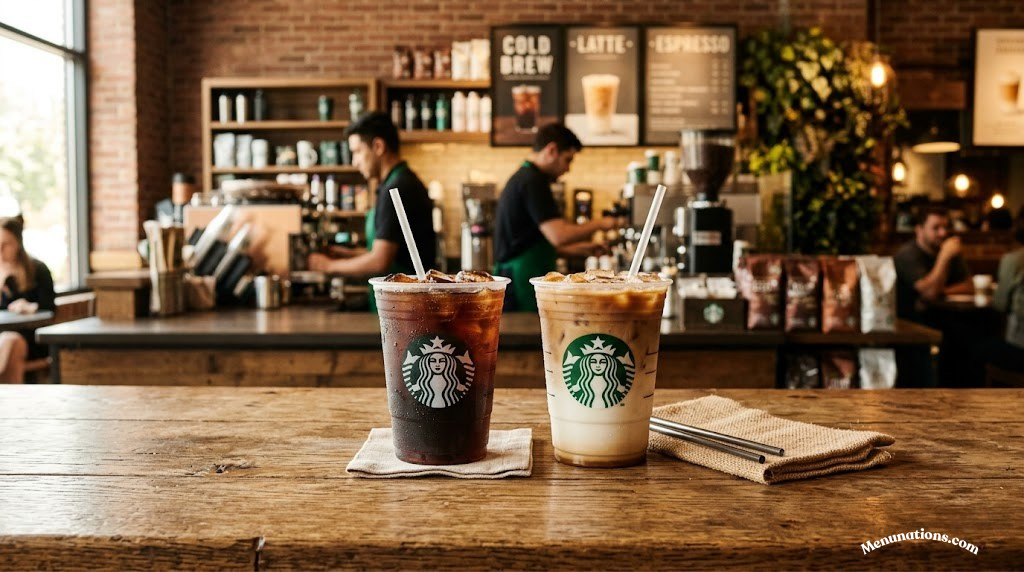
The Experience Seller
Premium beans. Craft drinks. Third place culture.
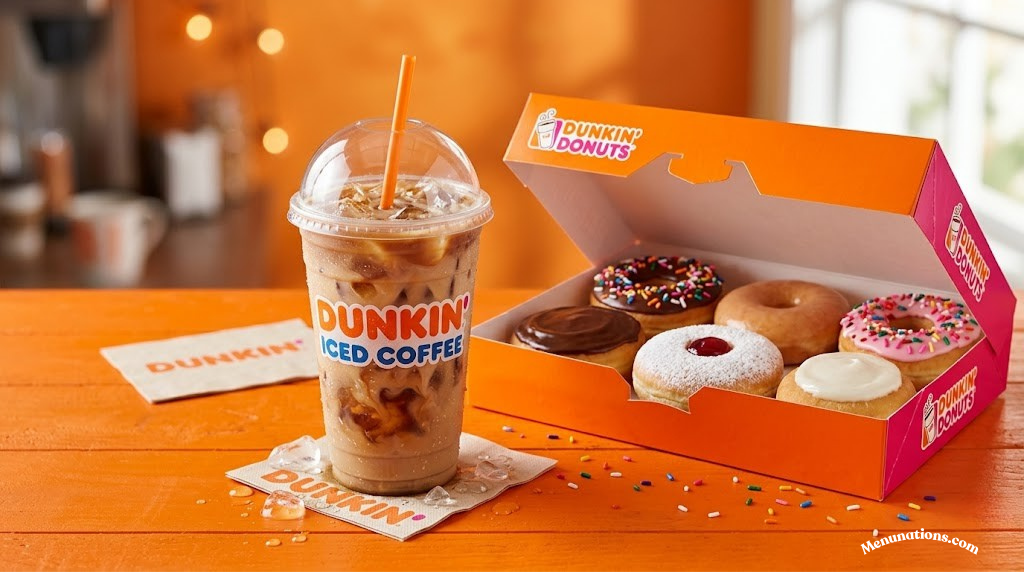
The Everyday Fuel Stop
Fast. Cheap. Consistent. America runs on it.
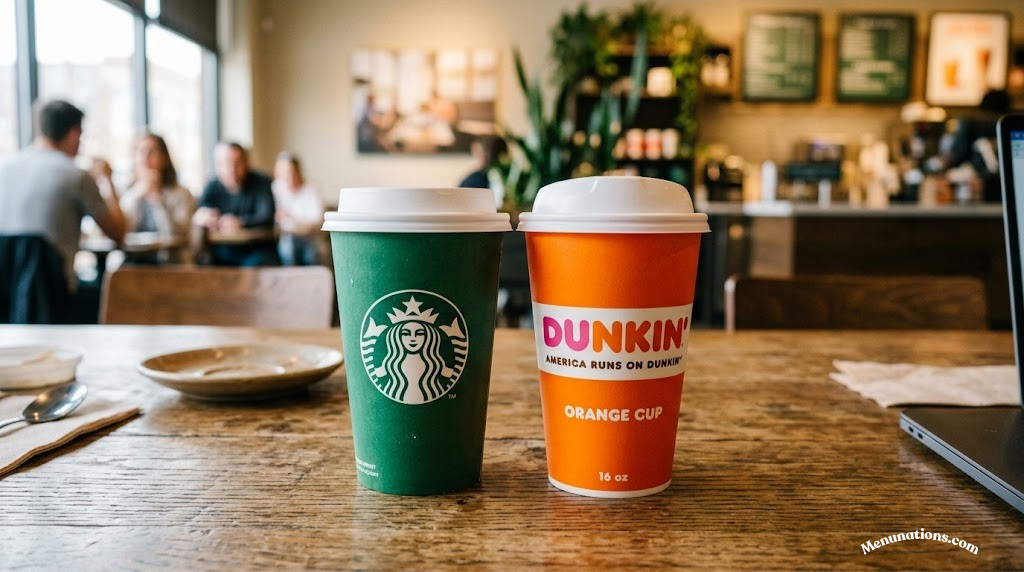
Two brands. Two philosophies. One question: where does your money go furthest?
The Two Giants of American Coffee Culture
There are coffee chains, and then there are Starbucks and Dunkin’. Between them, they’ve fundamentally shaped how Americans think about, order, and consume coffee outside the home. But the way they’ve done it couldn’t be more different — and that difference is the whole story.
Starbucks built itself around the concept of the “third place” — a space between home and work where you could linger, personalize your drink down to the most granular detail, and feel like you were participating in a premium experience. It positioned itself as aspirational without being stuffy, global without losing a sense of neighborhood warmth. The green cup became a status symbol, the cup sizes an insider language (Grande, Venti, Trenta), and the customization culture a form of personal expression that generated billions of social media impressions.
Dunkin’ — which dropped “Donuts” from its name as part of a strategic repositioning — took the exact opposite philosophy. Speed. Simplicity. Affordability. Dunkin’ isn’t selling you an experience; it’s selling you fuel. The menu uses normal size names. The line moves fast. The coffee tastes the same at every location. And it costs significantly less than its green-logo competitor. “America Runs on Dunkin'” isn’t just a slogan — it’s a brand promise about utility over theater.
☕ Starbucks
Founded in Seattle, 1971
36,000+ locations worldwide. Built on espresso craft, premium beans, and a loyalty program that’s among the most valuable in retail. Known for endless customization and seasonal drink launches that generate massive cultural buzz.
🟠 Dunkin’
Founded in Massachusetts, 1950
12,000+ locations, with dominant Northeast U.S. presence. Built on drip coffee, donuts, and fast-casual breakfast at accessible prices. Known for consistency, speed, and a loyal regional fanbase that treats it like a hometown institution.
This guide puts both chains through 11 head-to-head categories — assigning a winner to each — and tallies a final score. But the ultimate verdict is more nuanced than a number: the best chain for you depends entirely on what you want coffee to be in your life. Let’s find out which one that is.
If you want to dive deeper into individual chain menus before or after this comparison, the full Starbucks secret menu guide and the deep-dive Chipotle menu guide on MenuNations cover those chains in the same format.
☕ Bring the Café Home
A proper home espresso machine lets you replicate Starbucks-quality lattes and Dunkin’-style americanos at a fraction of the daily cost.
Shop Espresso Machines →Coffee Quality — Beans, Roasts & Flavor
Both chains use 100% Arabica beans — a legitimate baseline quality commitment that separates them from gas-station coffee. But what each chain does with those beans diverges significantly, and the difference shows up in the cup in ways that matter to anyone who genuinely pays attention to their coffee.
Starbucks: The Roaster’s Identity
Starbucks built its entire brand identity around its relationship with coffee sourcing and roasting. The chain sources beans through its C.A.F.E. Practices program (Coffee and Farmer Equity) — a third-party verified framework that covers quality, environmental impact, and social standards for farmers. This isn’t greenwashing; it’s a supply chain certification with real teeth that covers the majority of Starbucks’ global coffee procurement.
The roasting philosophy leans dark — famously dark, to the point where some coffee purists describe Starbucks’ standard roast as “burnt.” That characterization isn’t entirely unfair: the signature Starbucks roast profile emphasizes bold, smoky, bitter notes rather than the brighter fruit and floral notes that lighter roasts preserve. Starbucks has introduced lighter roast options (Blonde Roast) in response to this criticism, and these genuinely reveal a more nuanced flavor profile — but they’re not what most people associate with the green cup.
Dunkin’: The Consistency Champion
Dunkin’s drip coffee doesn’t aim to be a craft experience — it aims to taste exactly the same on a Tuesday in Bangor, Maine as it does on a Friday in Phoenix, Arizona. And it largely succeeds. The coffee is medium-roasted, smooth, and intentionally approachable: low bitterness, mild acidity, clean finish. It’s the kind of coffee that disappears pleasantly rather than demanding your attention, which is exactly what most people want from their morning fuel.
The flip side is that there’s a ceiling. Dunkin’ coffee doesn’t have the complexity or origin character of specialty coffee. It’s optimized for scale and consistency, not for showcasing what a particular bean from a particular region can taste like. For everyday drinking, that’s a feature, not a bug — but it means Dunkin’ will never produce the kind of “oh, I can taste the blueberry notes” coffee experience that specialty roasters and, occasionally, Starbucks’ lighter roasts can deliver.
| Coffee Attribute | Starbucks | Dunkin’ | Edge |
|---|---|---|---|
| Bean grade | 100% Arabica, sourced via C.A.F.E. Practices | 100% Arabica | 🟢 Starbucks |
| Roast variety | Blonde, Medium, Dark, Reserve | Original Blend (medium), Dunkin’ Midnight (dark) | 🟢 Starbucks |
| Drip coffee flavor | Bold, dark, smoky — polarizing | Smooth, mild, consistent — broadly likeable | Subjective |
| Sourcing transparency | Third-party verified C.A.F.E. Practices | Ethical sourcing stated, less specific | 🟢 Starbucks |
| Consistency | Variable by barista skill | Very high — optimized for uniformity | 🟠 Dunkin’ |
| Reserve / premium tier | Starbucks Reserve Roastery (select locations) | None | 🟢 Starbucks |
Starbucks takes coffee quality more seriously at a systemic level. The C.A.F.E. Practices sourcing, the roast variety, and the Reserve tier are genuine differentiators. However, if consistency and approachability matter more to you than origin character or sourcing depth, Dunkin’s drip coffee is the easier daily companion.
Espresso Drinks — Lattes, Cappuccinos & Americanos
Espresso is where the gap between these two chains becomes most visible. Starbucks was built on the Italian espresso tradition — it opened at a time when espresso-based drinks were largely unknown outside coastal cities, and it spent three decades training American consumers to drink lattes, cappuccinos, and macchiatos. Dunkin’ came to espresso much later, and while it’s now a serious espresso player, the depth of craft and the quality ceiling are noticeably different.
Starbucks Espresso: The Foundation
Starbucks uses its Espresso Roast as the default for all espresso-based drinks — a dark, intense roast designed to hold up under the pressure of steamed milk without disappearing. The result is a latte that has a bold, caramel-bitter backbone rather than a subtle, tea-like espresso flavor. For the majority of latte drinkers, especially those who add syrups, this profile works well. For espresso purists who want to drink shots straight, the dark roast is often too intense — which is why Starbucks’ Blonde Espresso was introduced as a lighter alternative that preserves more of the bean’s natural sweetness.
The execution of Starbucks espresso drinks varies by barista, but the training program and equipment standards are high enough that a well-made Starbucks latte with properly textured milk is a genuinely good coffee drink by most measures.
Dunkin’ Espresso: Capable, Not Craft
Dunkin’ invested significantly in its espresso program after shifting away from the “Donuts” identity, upgrading equipment and training. The result is espresso drinks that are competent and satisfying — particularly for people who sweeten and flavor their lattes — but that don’t reach the same ceiling as a well-executed Starbucks latte in terms of milk texture, crema quality, or espresso depth.
Where Dunkin’ espresso genuinely shines is in iced espresso drinks — the iced latte in particular is popular, well-priced, and has a smooth drinkability that casual coffee drinkers often prefer over the more intense Starbucks equivalent.
| Espresso Drink | Starbucks Price | Dunkin’ Price | Quality Edge |
|---|---|---|---|
| Latte (medium) | ~$5.45 | ~$3.79 | 🟢 Starbucks |
| Cappuccino (medium) | ~$5.25 | ~$3.79 | 🟢 Starbucks |
| Americano (medium) | ~$3.85 | ~$2.99 | Slight SB edge |
| Macchiato (medium) | ~$5.75 | ~$3.99 | 🟢 Starbucks |
| Iced Latte (medium) | ~$5.25 | ~$3.79 | Both good |
| Flat White | ✅ Available | ❌ Not on menu | 🟢 Starbucks only |
Dunkin’ Counterpoint: If you’re adding two or three pumps of caramel syrup to your latte anyway — which describes the majority of flavored-latte drinkers — the difference between Starbucks and Dunkin’ espresso narrows dramatically. The syrup becomes the dominant flavor. At that point, Dunkin’s lower price is a clear advantage with minimal quality trade-off.

🫘 Starbucks Espresso Roast at Home
Replicate your Starbucks latte at home with the same Espresso Roast beans the chain uses — available in whole bean and ground formats on Amazon.
Shop on Amazon →Cold Coffee — Cold Brew, Iced Coffee & Frozen Drinks
The cold coffee category has become one of the fastest-growing segments in the entire beverage industry, and both Starbucks and Dunkin’ have invested heavily in it. This is also where some of the most passionate brand loyalty exists — cold brew drinkers, in particular, tend to be deeply committed to their preferred chain.
Starbucks Cold Coffee: The Nitro Difference
Starbucks’ cold coffee lineup is the broadest in the mainstream coffee space. Cold Brew is the flagship — steeped for 20+ hours for a smooth, low-acid, concentrated coffee that’s become one of the chain’s most popular items. But the real differentiator is Nitro Cold Brew: cold brew infused with nitrogen gas and served through a tap, creating a creamy, velvet-textured drink that feels more like a stout beer than a conventional coffee. It has no dairy, yet tastes rich, which makes it one of the most impressive non-dairy coffee experiences available at any chain.
The Refreshers line — caffeine-forward fruit drinks using green coffee extract rather than traditional espresso — occupies a category entirely its own, appealing to people who want caffeine without a coffee flavor. Frappuccinos remain a cultural institution for the sweeter end of the spectrum.
Dunkin’ Cold Coffee: Value-Forward and Reliable
Dunkin’ cold brew is smooth, well-priced, and genuinely good — it’s become a major part of the chain’s identity in recent years. The Frozen Coffee (essentially a blended iced coffee) is a fan favorite for its dessert-adjacent sweetness, and the availability of flavored iced coffees at a meaningfully lower price than Starbucks makes Dunkin’ a strong contender for everyday cold coffee orders.
What Dunkin’ lacks is the Nitro tier. There’s no nitrogen-infused coffee option, no Reserve-grade cold brew, and the frozen drink lineup, while popular, doesn’t match the Frappuccino’s depth of variations. For casual cold coffee, Dunkin’ competes well on value. For specialty cold coffee experiences, Starbucks is in a different category.
| Cold Coffee Type | Starbucks | Dunkin’ |
|---|---|---|
| Cold Brew | ✅ 20-hr steep, multiple variants | ✅ Smooth, well-priced |
| Nitro Cold Brew | ✅ Nitrogen-infused, creamy texture | ❌ Not available |
| Iced Coffee | ✅ Available | ✅ Lower price, equally popular |
| Blended / Frozen | ✅ Frappuccino (enormous variety) | ✅ Frozen Coffee (simpler, cheaper) |
| Caffeine alternative drinks | ✅ Refreshers (green coffee extract) | ✅ Limited flavored options |
For a broader look at how specialty coffee concepts compete globally, the fine dining café culture in Singapore’s restaurant scene shows how different markets interpret premium beverage experiences — a useful perspective when thinking about where coffee chains fit in the broader hospitality landscape.
Food Menus — Breakfast, Sandwiches & Snacks
Neither Starbucks nor Dunkin’ is primarily a food destination, but food has become an increasingly important revenue driver for both. And this is one area where the comparison is surprisingly decisive.
Dunkin’ Food: Breakfast-First, Value-Driven
Dunkin’ built its identity on donuts — the glazed, the Boston Kreme, the strawberry frosted — and those remain popular comfort items. But the food menu has expanded substantially into breakfast sandwiches that are generous, affordable, and genuinely satisfying. The Bacon, Egg & Cheese on a croissant or an everything bagel is a legitimate breakfast meal at a price that makes sense. The Wake-Up Wraps offer a lighter handheld option. Hash browns round out the breakfast offering with crispy execution at an accessible add-on price.
Dunkin’ also offers a snacking menu — munchkins (donut holes), bagels with cream cheese, and a rotating selection of seasonal items — that fits the quick-service model well. The food at Dunkin’ is unashamedly unpretentious: it’s the kind of breakfast that fuels a workday without requiring a second thought.
Starbucks Food: Premium Aesthetic, Mixed Execution
Starbucks’ food menu aims higher in terms of presentation and ingredient messaging — turkey and pesto paninis, protein boxes with hard-boiled eggs and cheese, overnight grain bowls, sous vide egg bites — but the execution is variable and the price-to-portion ratio is often unfavorable. An egg bite that costs $5.25 and provides roughly 170 calories is a stretch when Dunkin’s Bacon, Egg & Cheese — which is larger, more filling, and costs around $4.49 — is sitting across the street.
Where Starbucks food legitimately shines is in bakery items. Croissants, banana bread, lemon loaf, and seasonal pastries are baked with enough quality to be genuinely enjoyable alongside a coffee. The Pumpkin Cream Cheese Muffin and the Chocolate Croissant are things people order specifically for the food, not just as an add-on impulse buy.
| Food Category | Starbucks | Dunkin’ | Winner |
|---|---|---|---|
| Breakfast sandwiches | Smaller, pricier ($5–$7) | Larger, better value ($3–$5) | 🟠 Dunkin’ |
| Donuts | ❌ Not available | Core menu item, wide variety | 🟠 Dunkin’ |
| Bakery / pastries | Higher quality, broader variety | Basic muffins and bagels | ☕ Starbucks |
| Protein snacks / boxes | Protein boxes, egg bites, grain bowls | Limited (hash browns, wraps) | ☕ Starbucks |
| Overall food value | Lower — premium-priced for portion size | Higher — substantial portions at lower prices | 🟠 Dunkin’ |
| Seasonal food items | More launches, higher media coverage | Seasonal donuts and sandwiches | ☕ Starbucks |
Dunkin’ wins on food for the simple reason that a breakfast sandwich at Dunkin’ is a meal, while a comparable Starbucks item is often a snack at a meal price. For morning eating alongside your coffee, Dunkin’ is the practical choice. This is a dynamic seen across the fast-casual space — similar to how the Greggs bakery menu in the UK prioritizes filling, accessible breakfast food over premium positioning.
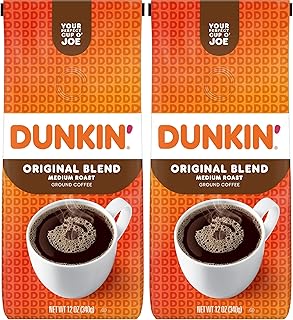
🟠 Dunkin’ Original Blend at Home
The same smooth, consistent medium roast Dunkin’ serves daily — now available in bags for your home brewer. Stock up and skip the line.
Shop on Amazon →Price & Everyday Value — Where Your Dollar Goes Further
This is the category where the gap is widest and most consistent. Dunkin’ is cheaper than Starbucks across virtually every comparable item — often by a significant margin. For anyone ordering coffee more than a few times a week, that difference compounds into a meaningful annual spend difference.
Starbucks
$5.45
Medium Latte
Dunkin’
$3.79
Medium Latte
Starbucks
$3.25
Medium Drip Coffee
Dunkin’
$2.09
Medium Drip Coffee
Starbucks
$5.45
Medium Cold Brew
Dunkin’
$3.99
Medium Cold Brew
Annual Cost Comparison (Daily Coffee Drinker): Ordering a medium latte five days a week at Starbucks costs roughly $1,417/year. The same habit at Dunkin’ runs approximately $985/year. That’s a $432 annual difference for a similar drink — enough to cover a weekend trip or several months of a streaming subscription.
| Item | Starbucks | Dunkin’ | Savings at Dunkin’ |
|---|---|---|---|
| Medium drip coffee | ~$3.25 | ~$2.09 | $1.16 |
| Medium latte | ~$5.45 | ~$3.79 | $1.66 |
| Medium cold brew | ~$5.45 | ~$3.99 | $1.46 |
| Breakfast sandwich | ~$5.75 | ~$4.49 | $1.26 |
| Frappuccino / Frozen Coffee | ~$5.95 | ~$4.29 | $1.66 |
Price comparisons like this are common across fast-food and fast-casual chains. The McDonald’s menu guide demonstrates a similar value-versus-experience tradeoff in the burger space, and the Panera Bread menu guide occupies a similar “premium fast casual” price bracket to Starbucks in its own category.
Customization — How Deep Can You Go?
Customization is one of Starbucks’ most defining cultural contributions to coffee. The chain essentially invented the mainstream concept of personalizing a coffee order to an individual’s exact specifications — and turned it into a social phenomenon.
Starbucks: The Customization Platform
A Starbucks order can be modified across multiple axes simultaneously: milk type (seven options), number of espresso shots (1–4+), syrup flavor (30+ options), syrup pumps (1–5+), temperature (hot, warm, iced, blended, extra hot), sweetener type, ice level, foam level, topping (whip, drizzles, sprinkles, powder), and size. The theoretical number of distinct Starbucks orders is famously estimated in the tens of thousands — though most people settle into a much smaller personal repertoire.
The Starbucks app makes this even more powerful: it remembers your past orders, lets you save favorites, and enables precise customization in writing before you arrive. The whole system is designed to make individual drink identity feel accessible and repeatable.
Dunkin’: Getting Better, But Still Behind
Dunkin’ allows meaningful customization — you can add flavor shots (a wider range than many people realize), choose milk type including oat milk, specify sweetness level and ice level on iced drinks, and add extra espresso shots. But the system is less codified, less consistently executed across locations, and less app-integrated than Starbucks. Staff familiarity with complex custom orders varies more, and the precision ceiling is lower.
Starbucks Customization Culture: The chain’s secret menu — documented extensively on the Starbucks secret menu guide — is entirely fan-created, using existing ingredients in combinations the menu doesn’t list. The Cotton Candy Frappuccino, Butterbeer Latte, and TikTok-viral Pink Drink all live here. This depth of off-menu culture is only possible because the customization system is so robust.
Dairy-Free & Plant-Based Options
For the growing segment of coffee drinkers who avoid dairy — whether for lactose intolerance, dietary preference, or ethical reasons — the availability of quality milk alternatives matters significantly. This category has become a meaningful competitive differentiator in the coffee space.
☕ Starbucks
Five Milk Alternatives
Oat milk (Oatly partnership), almond milk, soy milk, coconut milk, and macadamia milk at select Reserve locations. Plant-based alternatives available in all standard drinks. Surcharge applies (~$0.80–$1.00 per drink). Nitro Cold Brew is naturally dairy-free and creamy — a standout for plant-based drinkers.
🟠 Dunkin’
Two Milk Alternatives
Oat milk and almond milk available; availability varies by location. Fewer plant-based food options than Starbucks. Also applies a surcharge for non-dairy milk. Overall plant-based infrastructure is less developed than Starbucks across both drinks and food.

🌾 Barista Oat Milk — The Home Latte Secret
Oatly Barista Edition — the same brand Starbucks uses — froths properly for silky microfoam at home. The essential dairy-free milk for home lattes.
Shop Oat Milk →Loyalty Programs — Starbucks Rewards vs. Dunkin’ Rewards
Both chains run sophisticated loyalty programs that have become major revenue drivers and customer retention tools. But there’s a clear leader here — and it’s been the same one for a decade.
Starbucks Rewards: The Gold Standard
Starbucks Rewards is consistently ranked among the most valuable loyalty programs in the restaurant and retail industry. Members earn Stars on every purchase (2 Stars per $1 spent at standard tier, higher with co-branded Starbucks Visa). Stars redeem across five tiers — from a free espresso shot or dairy alternative at 25 Stars, to a coffee or tea drink at 100 Stars, to merchandise and Reserve experiences at the top tier.
The program also features personalized offers, double-Star days, early access to new products, and a dedicated birthday reward (free drink of any size and customization). The Starbucks app, which integrates the loyalty program with mobile ordering, digital tipping, and saved preferences, is one of the most-used retail apps in the United States.
Dunkin’ Rewards: Much Improved, Still Second
Dunkin’ overhauled its loyalty program — previously called DD Perks — into Dunkin’ Rewards, which now earns 10 points per dollar spent and offers free drinks at lower point thresholds than the previous system. The program rewards frequent buyers faster for basic drinks, and the Dunkin’ app has significantly improved in usability. A free medium drink every 200 points (200 points = $20 spent) is a competitive earn rate.
What Dunkin’ Rewards still lacks relative to Starbucks: tiered redemption flexibility (you can only redeem for a free drink, not for shots, add-ons, or merchandise), fewer personalized offers, and a smaller ecosystem of co-branded credit cards and partner benefits.
| Loyalty Feature | Starbucks Rewards | Dunkin’ Rewards |
|---|---|---|
| Earn rate | 2 Stars per $1 | 10 points per $1 |
| Redemption tiers | 5 tiers (25–400 Stars) | 1 tier (free drink at 200 pts) |
| Birthday reward | Free drink, any size, any customization | Free medium drink |
| Mobile app quality | Industry-leading | Much improved, still below SB |
| Personalized offers | Robust, AI-driven personalization | Limited, improving |
| Co-branded credit card | Starbucks Visa (bonus Stars) | None currently |
The In-Store Experience — Ambience, Seating & Culture
This is perhaps the most subjective category — but also one of the most consequential for understanding why people choose one chain over the other for different occasions.
Starbucks invested enormously in the concept of the third place. The stores are designed to be environments where you want to linger — comfortable seating, warm lighting, music that doesn’t demand attention, reliable Wi-Fi, outlets at most tables. People use Starbucks as a remote working venue, a meeting spot, a quiet reading space. The Reserve locations take this further, offering a full café-bar experience with bar seating, a more elaborate drink theater, and table service. The Roastery locations in major cities are destination experiences in themselves.
Dunkin’ makes no such ambition. The stores are optimized for throughput: get in, get your coffee and food, get out. Seating exists but it’s rarely the point. The design language is functional rather than atmospheric. Some Dunkin’ stores have been updated with a more contemporary look as part of the brand refresh, but they still feel more like a pit stop than a destination. For someone who wants to sit and work for two hours, Starbucks is the correct choice. For someone who wants coffee in 90 seconds and is back in their car, Dunkin’ wins.
Speed, Convenience & Accessibility
This is the category where Dunkin’ was built to win — and it does. If the measure of success is getting coffee in your hands as quickly as possible, Dunkin’ operates with an efficiency advantage that Starbucks’ more complex drink preparation and longer average order time simply can’t match.
Dunkin’: Engineered for Speed
Dunkin’ drive-throughs and counter service are among the fastest in the QSR coffee space. Drip coffee pours in seconds. Iced coffees are assembled rapidly. The simpler customization system means fewer bottlenecks and less barista judgment calls. The chain’s footprint — with its particularly dense Northeast presence and frequent standalone locations on commuter routes — is optimized for the morning-drive customer who needs coffee between leaving home and arriving at work.
Starbucks: Mobile Orders Changed the Equation
Starbucks’ in-store wait times, especially during peak hours, can be significant — the complexity of custom orders, the volume of mobile orders filling the pick-up shelf, and barista workload at busy locations creates genuine friction. However, the Starbucks mobile app, when used well, largely solves this: order ahead, walk in, grab your labeled cup, leave. This works particularly well at suburban and office-park locations where mobile orders make up a high percentage of transactions.
The Starbucks Drive-Through has also improved dramatically in speed and accuracy with technology investments, and Starbucks has opened an increasing number of drive-through-only locations designed to compete directly with Dunkin’ on the convenience axis.
Speed and accessibility are recurring themes across fast-casual comparisons. The KFC vs. Popeyes showdown involves a similar tension between throughput efficiency and menu complexity. For global context, Tim Hortons in Canada occupies precisely the Dunkin’-equivalent space in the Canadian market — speed-first, value-forward, deeply rooted in commuter culture.

🚗 Commuter Coffee Mug That Actually Works
Whether you’re team Starbucks or Dunkin’, a leak-proof insulated travel mug keeps your order at the right temperature for your full commute.
Shop Travel Mugs →The Final Verdict — Category by Category
| Category | Starbucks | Dunkin’ | Winner |
|---|---|---|---|
| Coffee Quality & Sourcing | C.A.F.E. Practices, multiple roasts | Consistent, smooth medium roast | ☕ Starbucks |
| Espresso Drinks | Deeper program, better execution | Capable, lower price | ☕ Starbucks |
| Cold Coffee | Nitro Cold Brew, Refreshers, Frappuccinos | Good cold brew, lower price | ☕ Starbucks |
| Food Menu | Better pastries, worse value | Better breakfast sandwiches, donuts, value | 🟠 Dunkin’ |
| Price & Everyday Value | Premium priced throughout | Consistently $1.50–$2 cheaper per drink | 🟠 Dunkin’ |
| Customization | Tens of thousands of combinations | Basic, functional | ☕ Starbucks |
| Dairy-Free Options | Five alternatives, integrated across menu | Two alternatives, limited locations | ☕ Starbucks |
| Loyalty Program | One of the best in retail | Much improved, still second | ☕ Starbucks |
| In-Store Experience | Third place culture, designed to linger | Efficient, functional, not a destination | ☕ Starbucks |
| Speed & Convenience | Improved, mobile ordering helps | Faster service, simpler ordering | 🟠 Dunkin’ |
Final Score: Starbucks 7 — Dunkin’ 3
Starbucks wins on categories. Dunkin’ wins on value. Neither is the wrong answer.
☕ Starbucks: Choose It When…
- You want the best espresso drinks quality
- You care about coffee sourcing and ethics
- You drink dairy-free and need options
- You want to sit, work, or linger
- Your order is complex and personalized
- You value a deep loyalty ecosystem
- You love seasonal drink launches
🟠 Dunkin’: Choose It When…
- Budget matters — you drink daily
- Speed is the priority
- You want a substantial breakfast sandwich
- You like your coffee simple and consistent
- You’re a drip coffee rather than latte person
- You want donuts with your order
- You’re in the Northeast and it’s everywhere
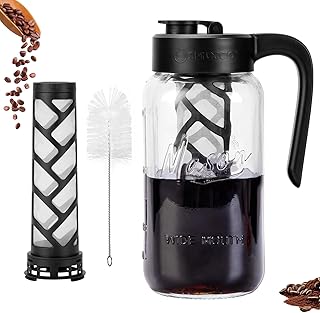
🧊 Make Café-Quality Cold Brew at Home
A cold brew pitcher lets you steep overnight and get smooth, low-acid cold brew every morning — at a fraction of the Starbucks cold brew price.
Shop Cold Brew Makers →